01 / Concept

Self-discovery becomes possible when experience acts like a mirror.

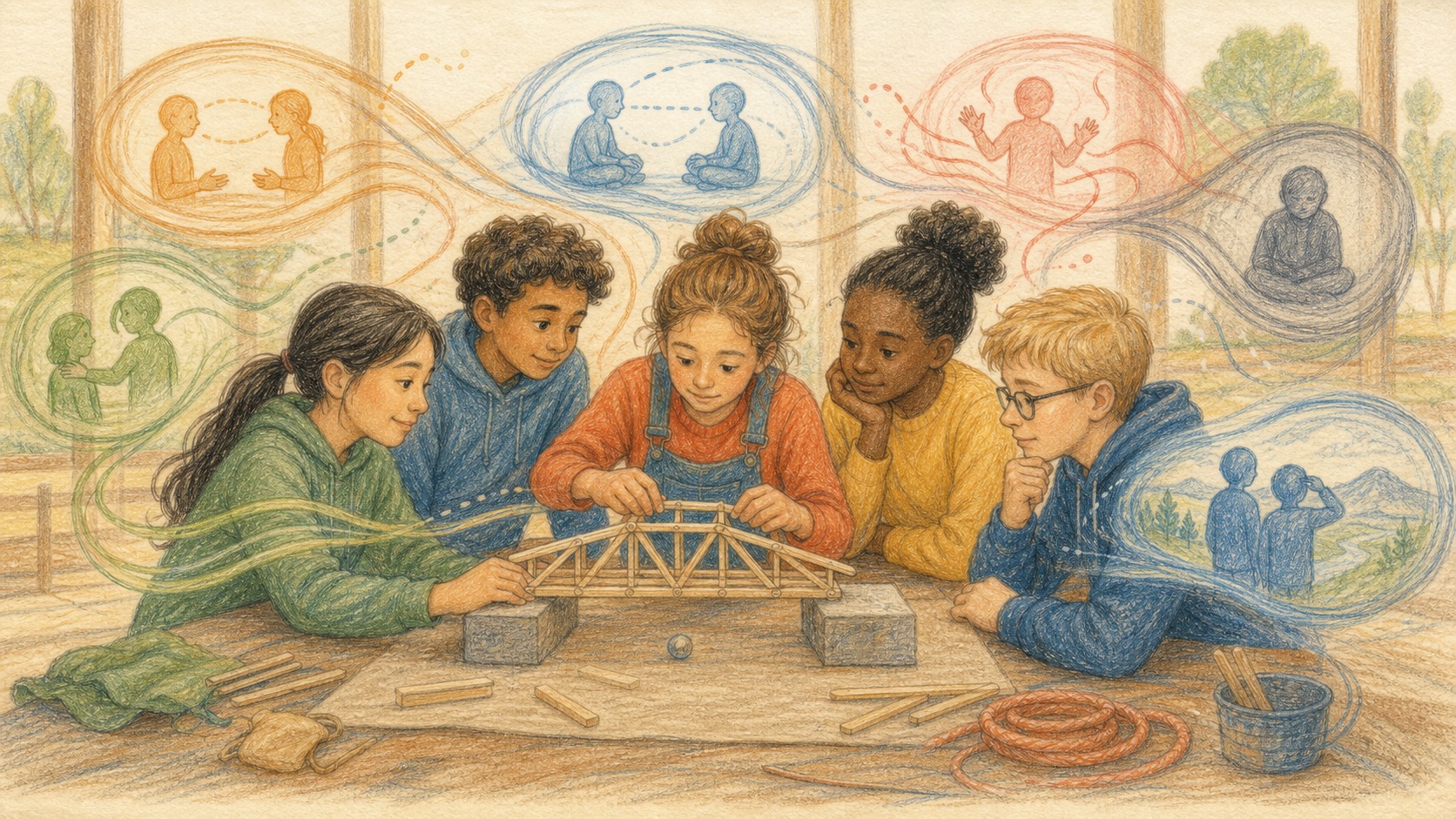
The concept begins with hidden capacities: observation, empathy, courage, adaptation, and growth. Shared experience helps those capacities become visible.

01 / Deeper Purpose

Why CoreXformer exists beyond activities and reflection

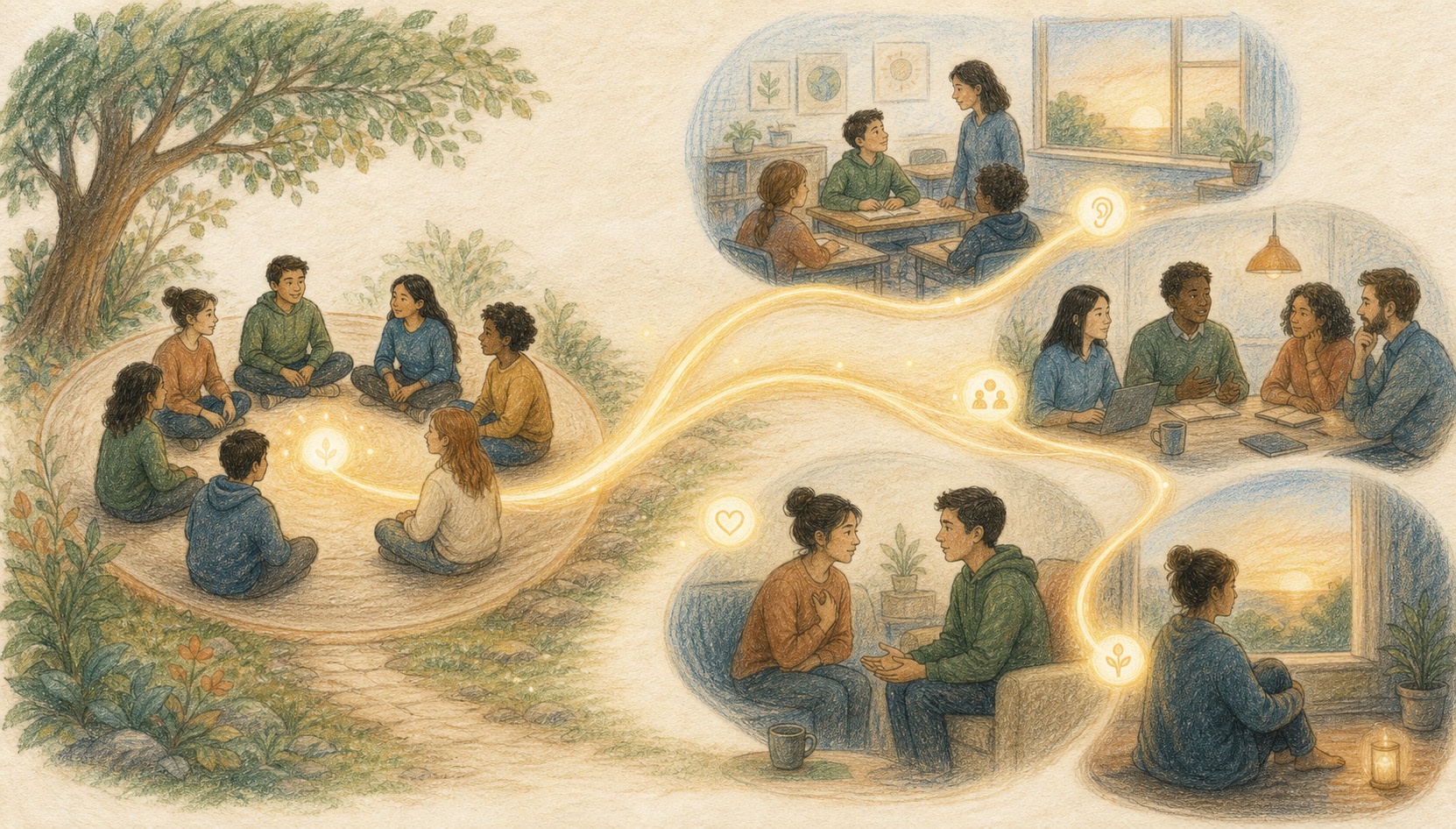
Pencil color story artwork of people gathering around a shared objective as light opens in the center

CoreXformer exists to rebuild human understanding. It creates shared situations where people notice their own behavior, recognize others more openly, and move beyond ego toward a common purpose.

Read more

The deeper purpose of CoreXformer goes beyond activities and reflection alone. In today's world, many people are increasingly isolated in subtle ways, even while surrounded by technology and constant connection. As a result, the ability to understand our own behavior, recognize the behavior of others, and relate meaningfully in shared situations has become weaker.

CoreXformer creates spaces where people come together around a common objective and experience what happens when different mindsets, emotions, habits, and perspectives meet in one place. In those moments, participants are invited to understand not only themselves, but also the inner worlds of others with greater openness and humanity.

At a deeper level, this work is also about moving beyond ego when needed. It is about recognizing that sometimes a shared objective is greater than individual resistance, pride, or personal position. Through that process, people can discover a more alive and meaningful way of being together, even without external reward.

02 / Human Gap

What this initiative is trying to respond to

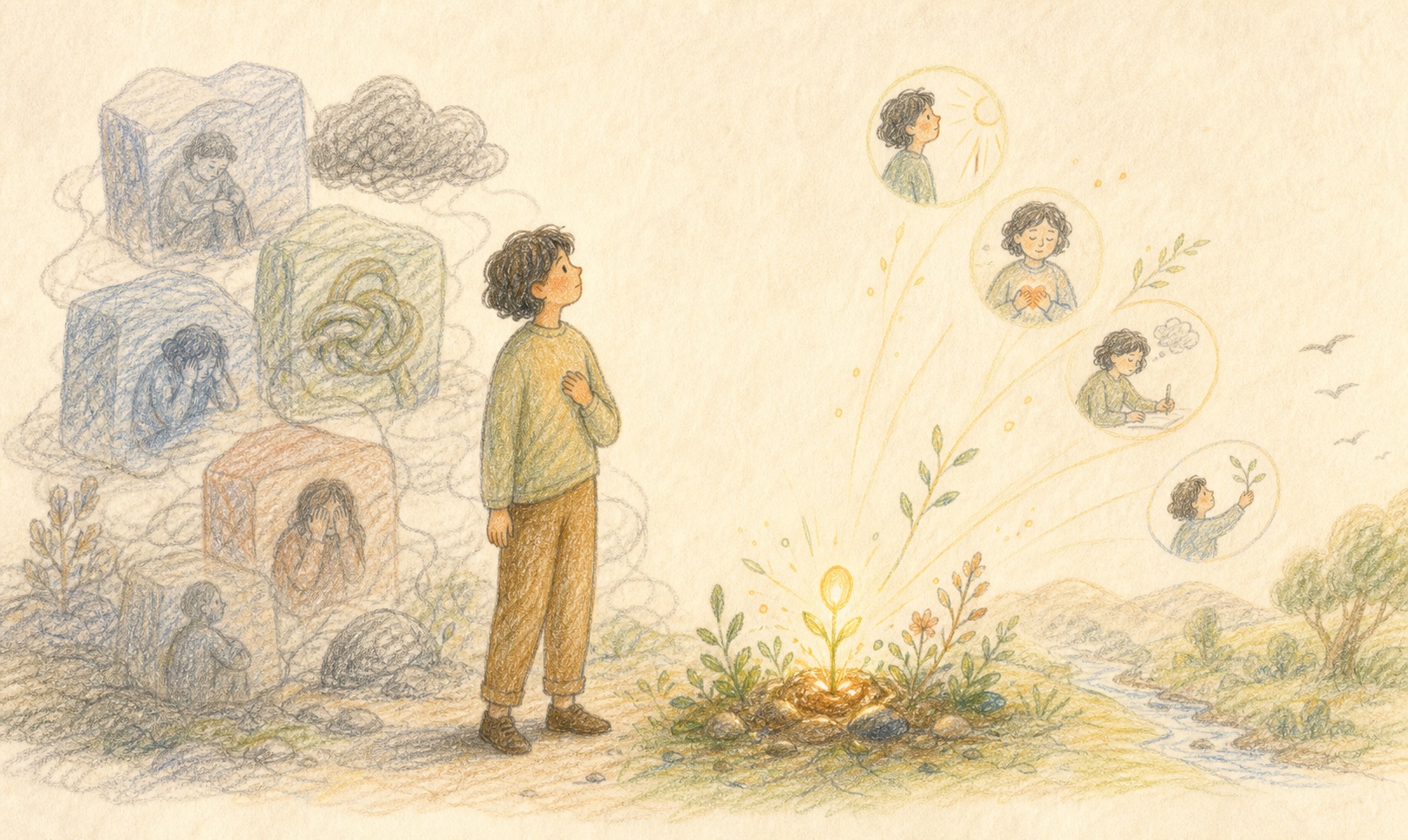
Pencil color story artwork of a person observing inner blocks, emotions, and paths opening forward

The initiative responds to underused human capacities: observation, feeling, reflection, adaptation, and emotional honesty. It helps people notice what blocks growth and reconnect with what is already within them.

Read more

CoreXformer responds to a deeper human gap: many people move through life with natural inner capacities that remain underused or blocked. Human beings are already gifted with the ability to observe, feel, reflect, and adapt, yet cultural conditioning, rigid mindsets, self-doubt, and unspoken emotional habits often reduce this natural potential.

This initiative creates space for self-discovery and for reconnecting with the power of observation. It invites people to notice what they carry within themselves, including hesitation, fear, doubt, emotional suppression, and fixed ways of thinking. In doing so, it helps participants loosen some of the inhibitions they may have absorbed over time and move toward a more adaptable, aware, and open way of being.

CoreXformer is also about recognizing that self-discovery is not a journey of perfection. It is a journey of meeting one's own flaws, limits, and patterns honestly, and learning to see them not only as weaknesses, but also as places from which change, learning, and adaptation can begin. The process encourages people to discover their own potential, to recognize the potential in others, and to build greater trust in their ability to grow through real situations.

At another level, this initiative also makes room for raw emotion. Many people learn to hide what they truly feel because of circumstance, expectation, or fear of judgment. Over time, this disconnection from emotion can create inner strain and deeper difficulties in life. By offering a safe and reflective space, CoreXformer allows people to acknowledge emotions more honestly and to see them as part of being human rather than something to suppress or deny.

03 / Understanding Self And Others

What this means in a team context

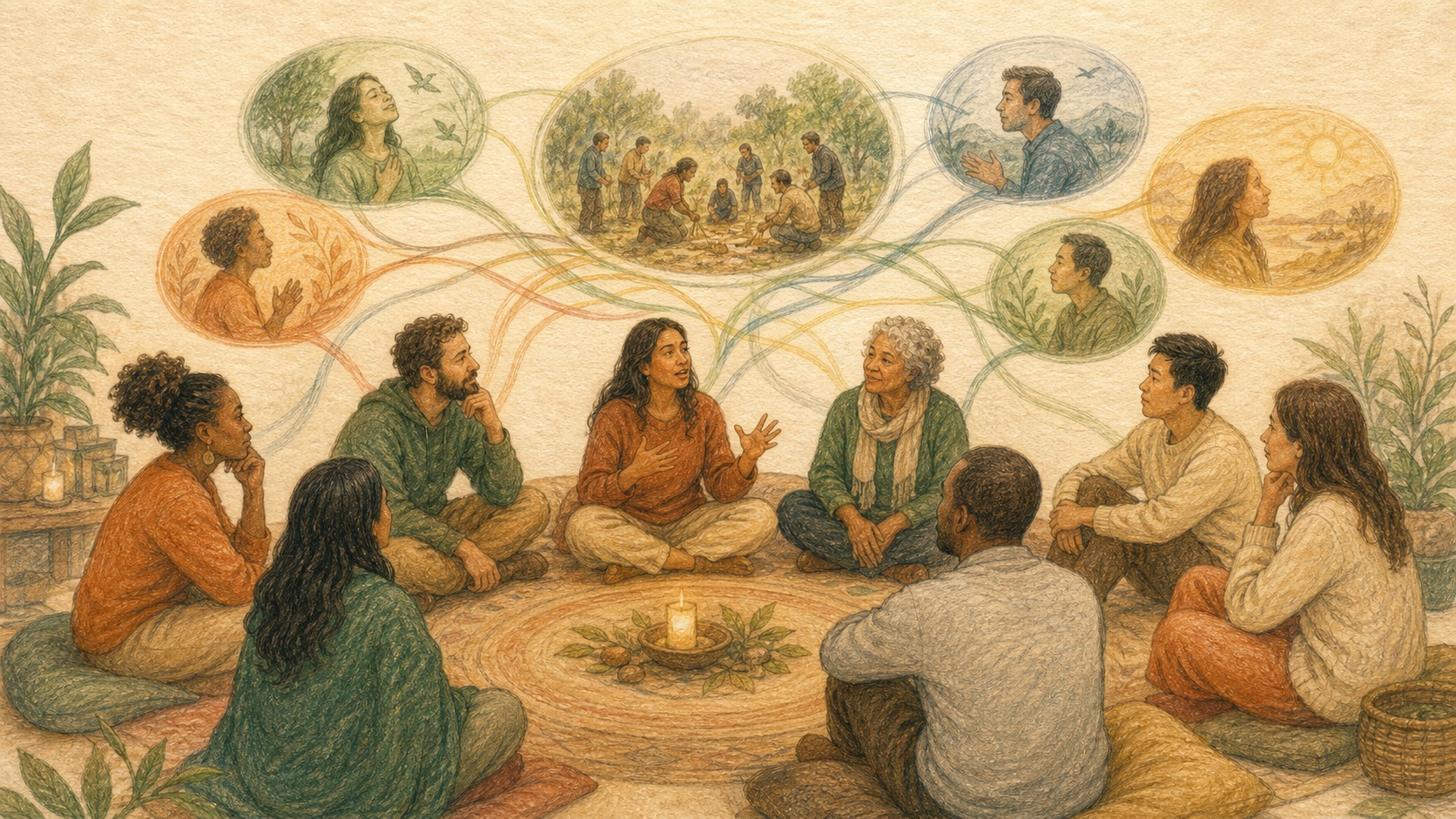
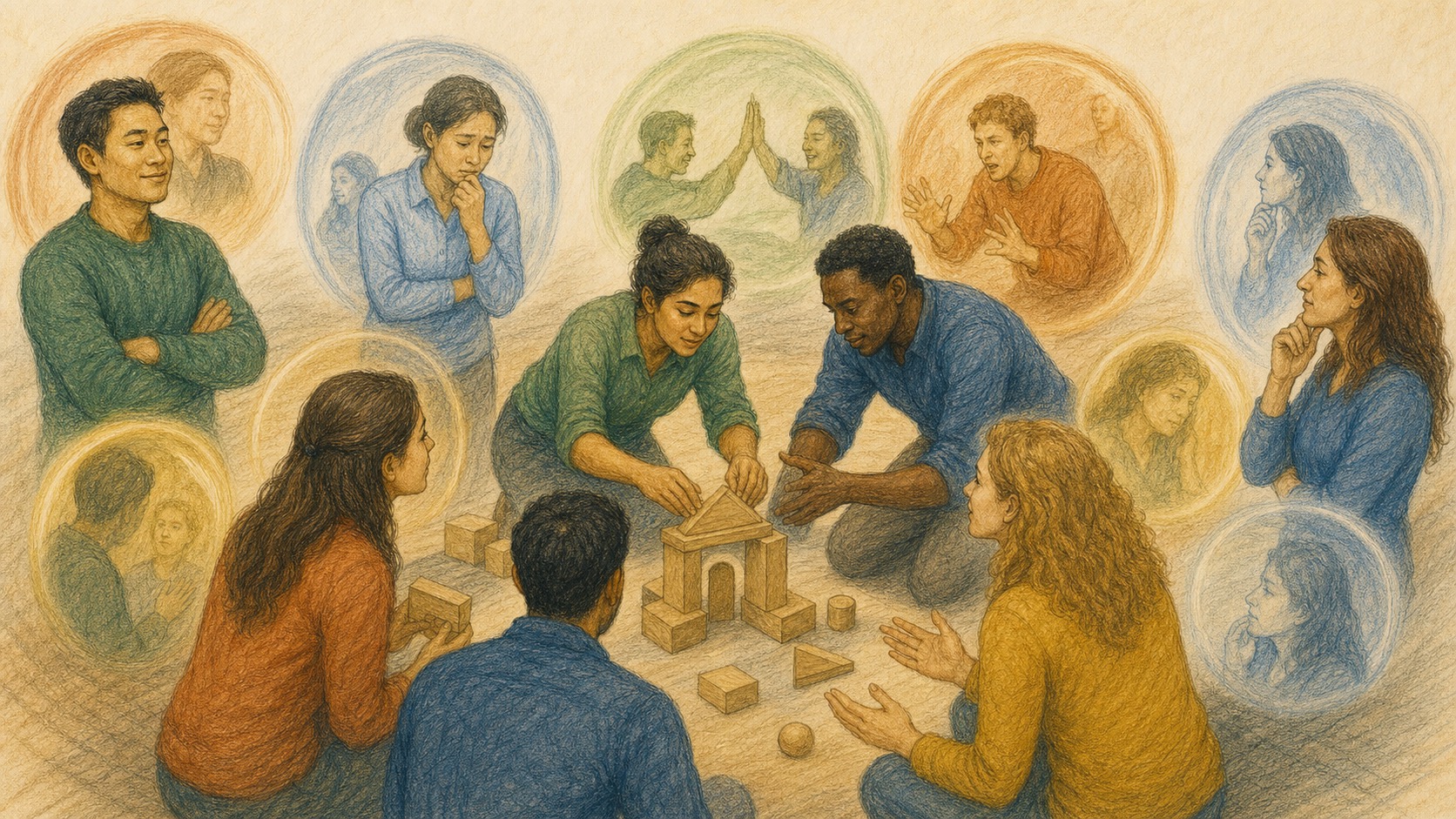
Pencil color story artwork of different inner worlds meeting around one shared team objective

In a team, people do not only bring roles and skills. They bring inner pictures of the world, assumptions, emotions, and habits that shape how they respond to each other and the shared objective.

Read more

In a team context, understanding self and others means looking at the larger picture of perception. Every human being carries a certain inner picture of the world, shaped by different experiences, environments, conditions, and ways of growing. When people with different inner worlds come together around a common objective, they do not simply bring skills or roles. They also bring assumptions, emotional tendencies, habits, perspectives, and ways of responding to situations.

CoreXformer creates space to observe what happens when these different ways of being meet in one team situation. How do people understand each other's perspective? How do they respond when someone thinks or behaves differently from them? How do they influence each other, support each other, resist each other, or adapt to each other in the movement toward a shared objective?

This process also helps reveal whether people are able to adapt to a given situation and, when they are not, what may be making that difficult. Sometimes the difficulty comes from prior experience. Sometimes it comes from fear, conditioning, ego, uncertainty, or a fixed interpretation of what is happening. When these patterns remain unseen, they affect the functioning of the team. When they become visible, they can become part of learning.

The deeper the reflection, the more people begin to discover not only their own perspective, but also the many possible perspectives that can exist within the same situation. This creates greater understanding, a broader human view, and a more conscious way of functioning together.

04 / Stronger Team Ecosystems

What team strength really means here

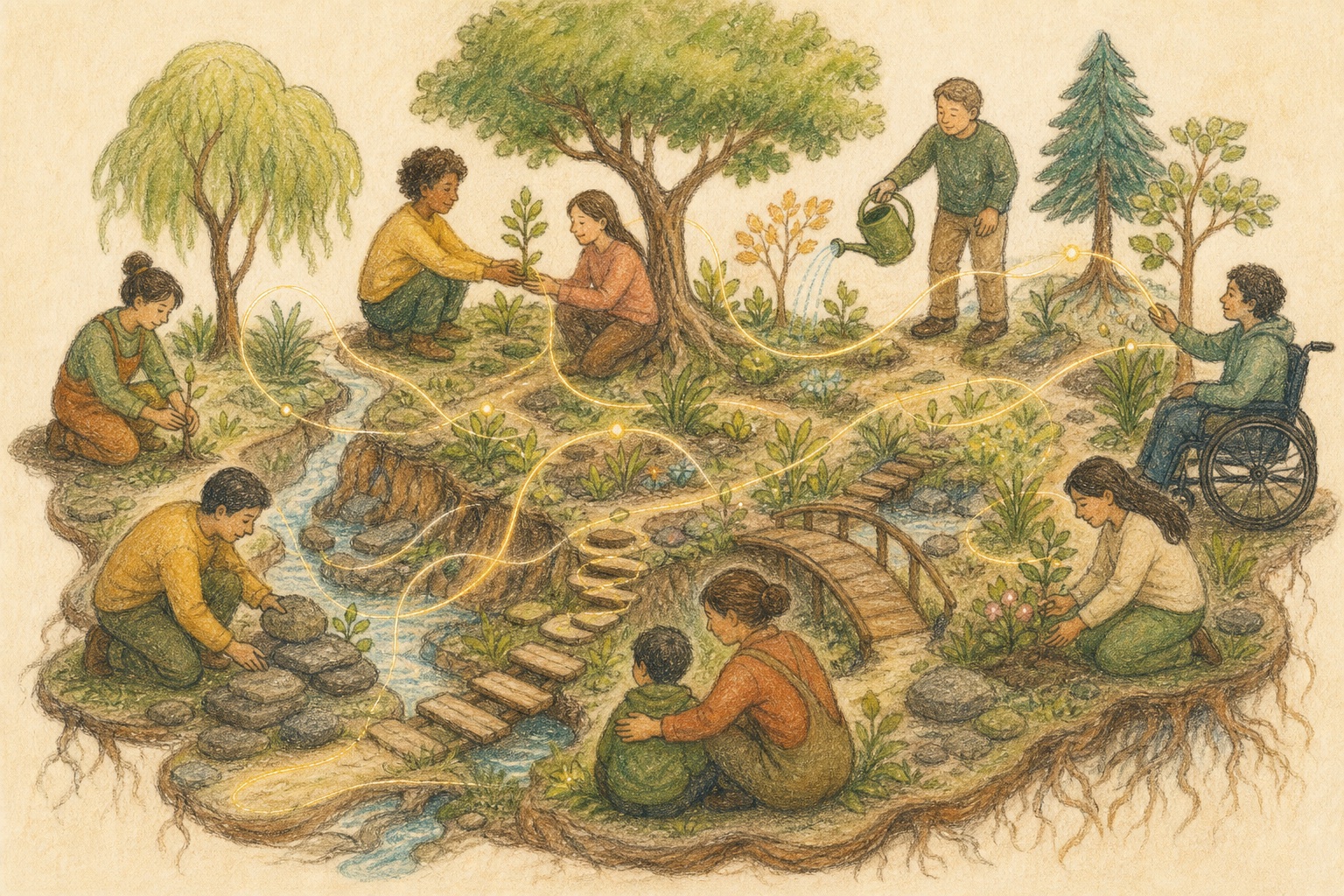
Pencil color story artwork of a team ecosystem growing through roots, bridges, and shared movement

Team strength here means honest acceptance of differences, room to grow, agility after failure, empathy for limitations, and the ability to let perspectives coexist instead of discarding them too quickly.

Read more

A stronger team ecosystem is created when people are able to understand each other's differences and limitations with greater honesty and acceptance. It grows when individuals and groups learn how to adapt in varied situations, give one another room to grow, and gradually shed ego-based blockages in order to move toward a shared objective.

It also means that a team does not treat failure as an ending, but as a stepping stone for improvement. A stronger team is able to return to the next situation with greater agility, deeper bonding, and a more grounded understanding of how it wants to function. Rather than breaking under difficulty, it learns, regroups, and responds with greater maturity.

Such an ecosystem also requires empathy. It asks whether a team can recognize individual limitations without immediate judgment, and whether it can create a safe developmental space where people are allowed to learn, improve, and contribute in their own growing way.

At its best, team effectiveness is not only about getting a result. It is also about allowing perspectives to coexist, evolve, and be heard rather than discarded too quickly. Over time, this helps a team discover how to become stronger from within, more adaptive in changing situations, and more connected in the way it works together.

05 / Why This Matters Today

Why this work is especially relevant now

Pencil color story artwork of people moving from isolated islands toward a shared learning bridge

This matters now because individual success often overshadows shared growth. CoreXformer brings attention back to collective awareness, human connection, and the strength that emerges when different minds meet meaningfully.

Read more

In today's world, people are increasingly encouraged to think and function in individualistic ways. Personal success, personal performance, and personal achievement are often given more importance than the deeper understanding of human behavior, relationships, and shared growth. As a result, the ability to work meaningfully with others, understand differences, and build healthy collective spaces is becoming weaker in many parts of life.

CoreXformer responds to this need by bringing attention back to the human side of working together. Real change in any ecosystem does not happen through individuals alone. It becomes possible when people are able to come together around a shared objective, hold different perspectives in one space, and learn how to function with greater coherence, awareness, and mutual understanding.

There is a unique strength that emerges when different minds meet in a meaningful and connected way. When people are able to move beyond isolation, rigidity, and ego, they create something stronger than what any one individual can produce alone. This is why experiential learning matters today. It helps people return to the depth of human connection, shared learning, and collective growth that many modern systems have begun to neglect.

02 / Approach

A purposeful challenge reveals what ordinary conversation cannot.

CoreXformer uses short activity-led situations to reveal real responses. The activity is not the destination. It is the mirror through which learning becomes possible.

01 / Activities As Mirror

Why the activities exist at all

Pencil color story artwork of a group using an activity as a mirror for real human situations

Activities create a short, focused simulation of real life. They help participants see how they respond to pressure, uncertainty, relationships, difference, and shared responsibility.

Read more

The deeper purpose of the activities is to create a simulated space that reflects real-life human situations within a shorter and more focused time frame. In everyday life, people are shaped and challenged by situations. They respond to pressure, uncertainty, relationships, expectations, and shared objectives in ways that reveal their habits, emotions, and patterns of behavior.

The activities in CoreXformer are designed to recreate situations that are similar in nature to real-world experiences. Although they happen in a shorter span of time, the responses that emerge within them are often closely connected to how people behave in real situations. In this way, the activity is not the final goal. It is a mirror that helps participants see how they respond when faced with challenge, coordination, difference, and shared responsibility.

02 / Short Activity Arcs

Why most activities stay within 10 to 20 minutes

Pencil color story artwork of groups moving through short focused experiential activity arcs

Short activity arcs respect real institutional time limits while keeping energy alive. They allow participants to enter fully, stay fresh, and experience multiple learning moments in one session.

Read more

The activities are intentionally kept short, usually within 10 to 20 minutes, for two important reasons. The first is practical: many schools, colleges, corporates, communities, and government organizations work within limited time windows, so the format needs to respect those constraints. The second is experiential: shorter activities help keep the energy, attention, and engagement of participants more alive.

A shorter activity arc allows people to enter a situation fully without losing freshness or involvement. It also creates room for multiple experiences within one session, which means participants can encounter different kinds of situations, responses, and learning moments in a single engagement. This helps maintain participation, curiosity, and openness throughout the process.

03 / Time Pressure

Why urgency is part of the learning design

Pencil color story artwork of a team working under gentle time pressure during an activity

Time pressure is used carefully because urgency makes natural responses more visible. It helps people notice what happens to communication, decision-making, emotion, and team behavior under pressure.

Read more

Many challenges in life come with a time factor. Time pressure often brings out inner behavior more clearly in a given situation. When people are working toward an objective within limited time, their natural reactions, emotions, communication patterns, and decision-making styles become more visible.

In CoreXformer, time pressure is not used to create stress for its own sake. It is used to help participants see how they respond when urgency is present. This makes reflection deeper, because people are able to notice what happens to them under pressure and how that affects the team and the outcome.

Over time, this also creates the possibility for participants to grow beyond the immediate pressure of time. Instead of being controlled by urgency, they begin to observe it, understand it, and respond with greater awareness.

04 / Reflection Space

How meaning is created after the activity

Pencil color story artwork of participants reflecting together after an activity

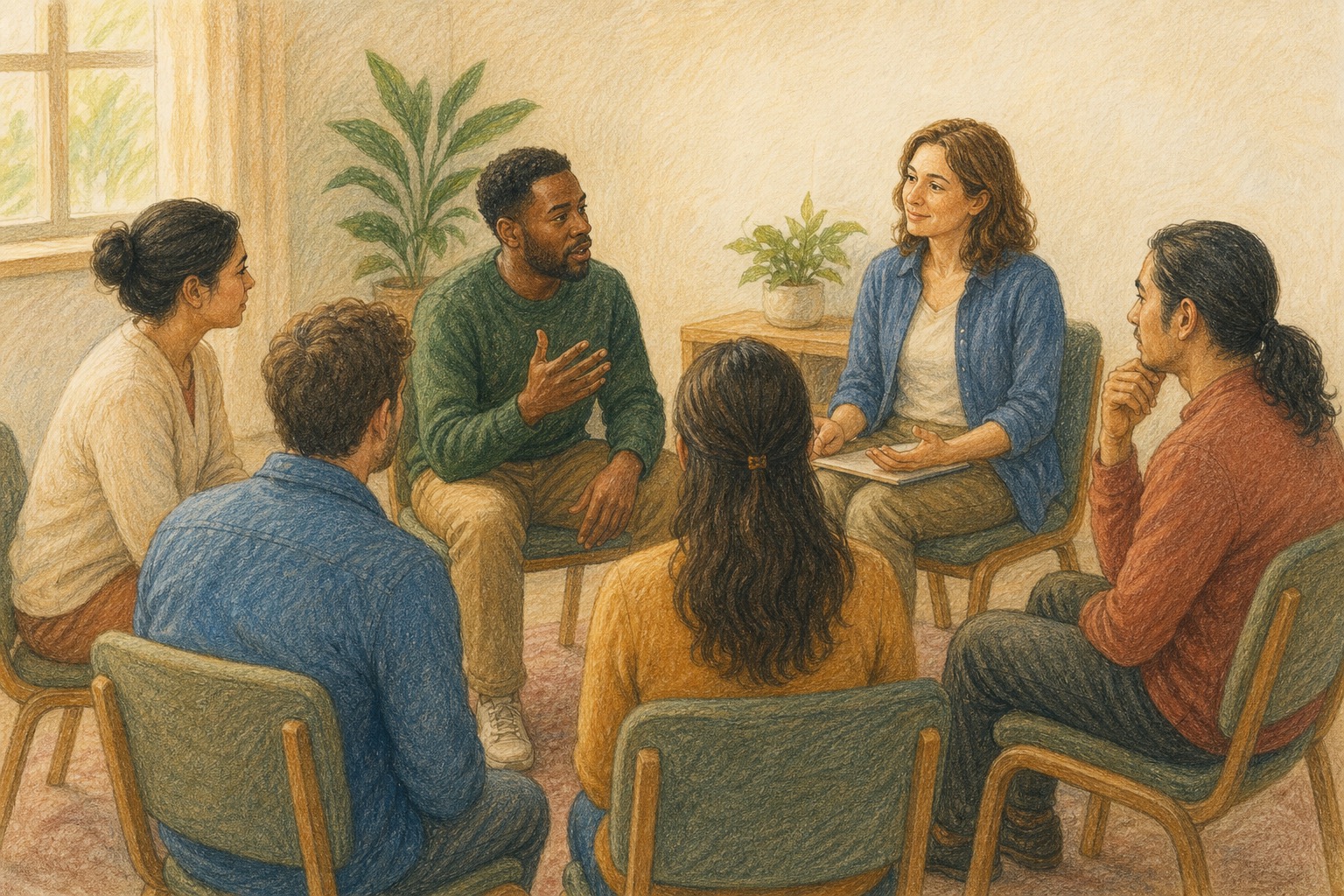
Reflection turns the activity into meaning. Participants compare perspectives, notice reactions, understand what helped or blocked the group, and begin to see the experience as a doorway into awareness.

Read more

The reflection space is a collaborative part of the process where participants bring diverse perspectives to the same situation. They explore how different people experienced the activity, what reactions and behaviors appeared, and what may have been functional or non-functional in that moment. This allows the same experience to open up in many directions, making the learning richer and more human.

Reflection also creates space for inner realization. Participants begin to ask themselves why they behaved in a certain way, what influenced their response, and whether any change may be needed in similar situations in the future. In this way, the activity becomes more than an event. It becomes a doorway into self-awareness.

Just as importantly, the reflection space is meant to be safe. It invites people to understand one another without harming, dismissing, or judging each other. It gives room and respect for both self and others to express thoughts, feelings, and experiences honestly. That sense of safety is what allows insight to deepen.

05 / Safe Space

How openness becomes possible

Pencil color story artwork of a safe group space where mistakes are held as learning

Safe space is created by the whole group. It allows people to express what they felt, meet difference with grace, and treat mistakes as part of growth rather than personal weakness.

Read more

A safe space is not created by the facilitator alone. It is a shared effort of the whole group. It begins when participants understand that this is a space where they can express what they genuinely felt in a situation without fear of judgment. That understanding makes reflection possible in a deeper way.

In this space, differences of opinion are not treated as threats. They are received with greater grace, respect, and openness. Even when a task is not completed, or when failure appears, the experience is held as part of learning rather than something to hide or feel ashamed of.

A safe space also includes the freedom to make mistakes. People are allowed to try, fail, reflect, and still remain accepted within the process. When mistakes are seen as steps in growth rather than personal weakness, participants are more able to open up honestly and learn meaningfully.

06 / Awareness Over Winning

Why completion is not the only measure

Pencil color story artwork of a team reflecting around an unfinished task

The shared objective matters, but winning is not the only measure. The deeper value is what becomes visible about behavior, communication, emotion, adaptability, and team functioning.

Read more

Winning an activity is not the sole purpose of this process. The deeper purpose is to create awareness within the situation. When participants begin to discover more about themselves and others through the experience, they become more functional, more aware, and more capable in similar situations in life.

The activity offers a shared objective, but the true learning lies in how people move toward that objective together. What matters most is not only whether the task was completed, but what became visible about behavior, communication, emotion, adaptability, and team functioning along the way.

In this sense, awareness has greater value than winning. A completed task may end in the moment, but awareness can continue to shape how people respond in future relationships, teams, and real-life objectives.

07 / After The Session

How the learning is meant to travel forward

Pencil color story artwork of participants carrying learning forward into future paths

The session may be short, but the learning is meant to travel. Participants carry awareness into future leadership, collaboration, communication, adaptation, and real-life challenges.

Read more

The learning from the session is meant to stay with participants beyond the experience itself. It can support them in future situations where they need to lead a team, work within a leadership group, collaborate with others, or respond to new challenges in life with greater awareness.

As participants carry the learning forward, they may begin to respond better in unfamiliar or demanding situations. They can become more conscious in how they communicate, adapt, make decisions, and work with other people. Over time, this can help them function more effectively and grow into stronger, more grounded versions of themselves.

The session may be short, but the learning is meant to travel into future life situations where better awareness can lead to better action.

Explore more about Approach

03 / Who It Is For

Different spaces meet the same human need for trust and awareness.

The work adapts across learning spaces, workplaces, public systems, and communities because people everywhere carry the need to understand themselves and each other.

01 / Audience Fit

Different spaces, different objectives, one continuing human need

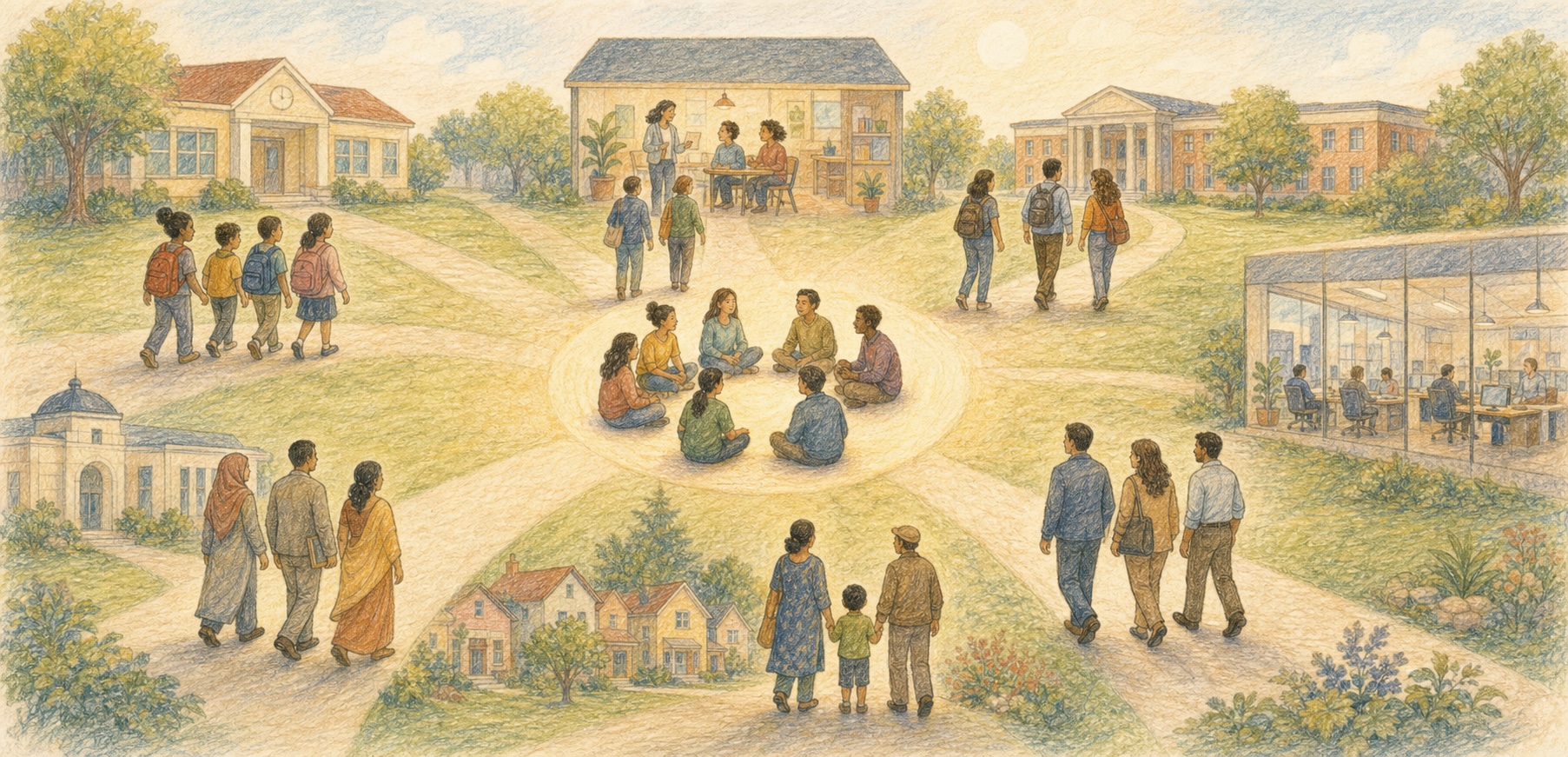
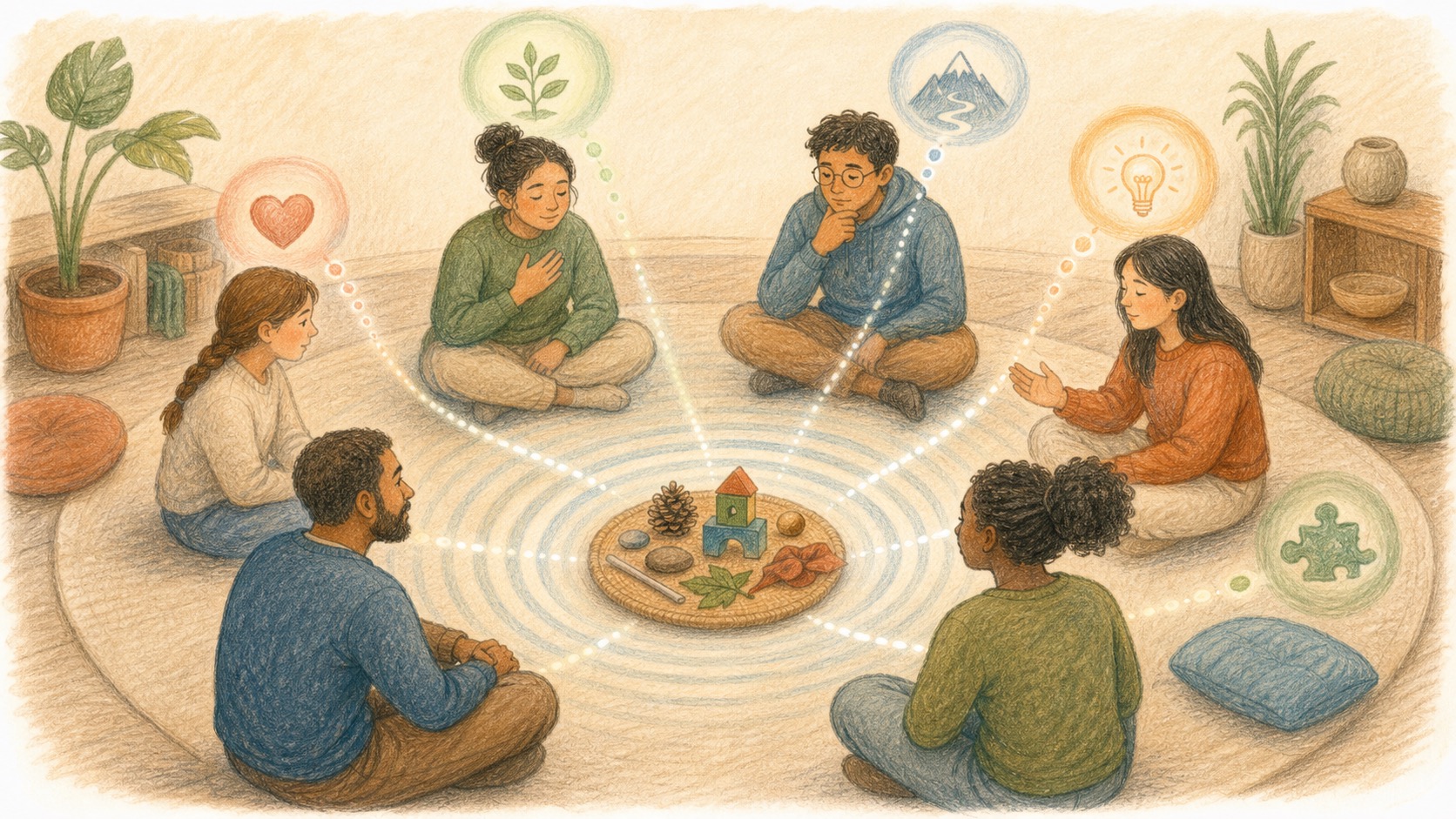
Pencil color story artwork of six audience worlds connected by one shared reflective learning circle

CoreXformer adapts across six audience worlds because the same reflective method needs different language, tone, and starting points in different spaces.

Read more

CoreXformer is organized around six audience worlds because the same reflective method shows up differently depending on the group. A school needs one kind of language, a college another, a corporate team another, and a community another, even when the deeper human work overlaps.

The aim is to help each visitor recognize the most relevant starting point for their group.

02 / Schools

Helping student groups feel, connect, and grow through reflective experience

Pencil color story artwork of school students collaborating and reflecting in a safe courtyard

For schools, the work supports belonging, confidence, teamwork, emotional awareness, and healthier peer connection through shared activity and guided reflection.

Read more

In school settings, experiential learning can support the parts of growth that are often hard to teach through instruction alone: belonging, confidence, teamwork, emotional awareness, and healthier peer connection. CoreXformer offers students a structured space where those things become visible through shared activity and guided reflection.

This makes the work especially relevant for new class groups, hesitant student teams, houses, clubs, and school settings that want children not only to study, but also to feel safer, connect more honestly, and grow into more aware human beings.

The strongest current fit is for middle school, secondary, and higher-secondary groups that are ready for active participation and simple reflective conversation.

03 / Teachers

Supporting educators who hold classroom climate, student connection, and pressure every day

Pencil color story artwork of teachers reflecting together in a warm classroom

Teachers hold energy, tone, trust, pressure, and relationship every day. This line supports stronger presence, better connection, conscious response, peer collaboration, and renewal.

Read more

Teachers are not only content deliverers. They are also people who hold energy, tone, trust, pressure, and human relationship in a room every day. CoreXformer’s teacher line is designed for that lived reality.

This makes the work relevant for educators who want stronger classroom presence, better student connection, more conscious responses under pressure, better collaboration with peers, and healthier renewal over time.

The teacher-facing programs are especially useful when a school wants teacher development to feel reflective, human, and practical rather than generic or overly corporate.

04 / Colleges

Supporting students who are moving through identity, teamwork, pressure, and readiness for work life

Pencil color story artwork of college students collaborating while moving toward work-life readiness

College spaces sit between student life and work life. CoreXformer helps students practice belonging, teamwork, speaking up, pressure awareness, and responsible adulthood.

Read more

College spaces often sit between student life and workplace life. Students are learning how to belong, how to work in teams with less supervision, how to speak up across difference, and how to carry pressure with greater awareness.

This makes CoreXformer relevant for first-year orientation groups, club teams, project groups, placement readiness cohorts, and emerging student leaders who are trying to grow into more responsible adulthood.

The college program line is especially useful where a campus wants students to become more self-aware, collaborative, resilient, and workplace-ready through lived experience rather than advice alone.

05 / Corporates

Supporting teams and managers who need trust, communication, ownership, and steadier work under pressure

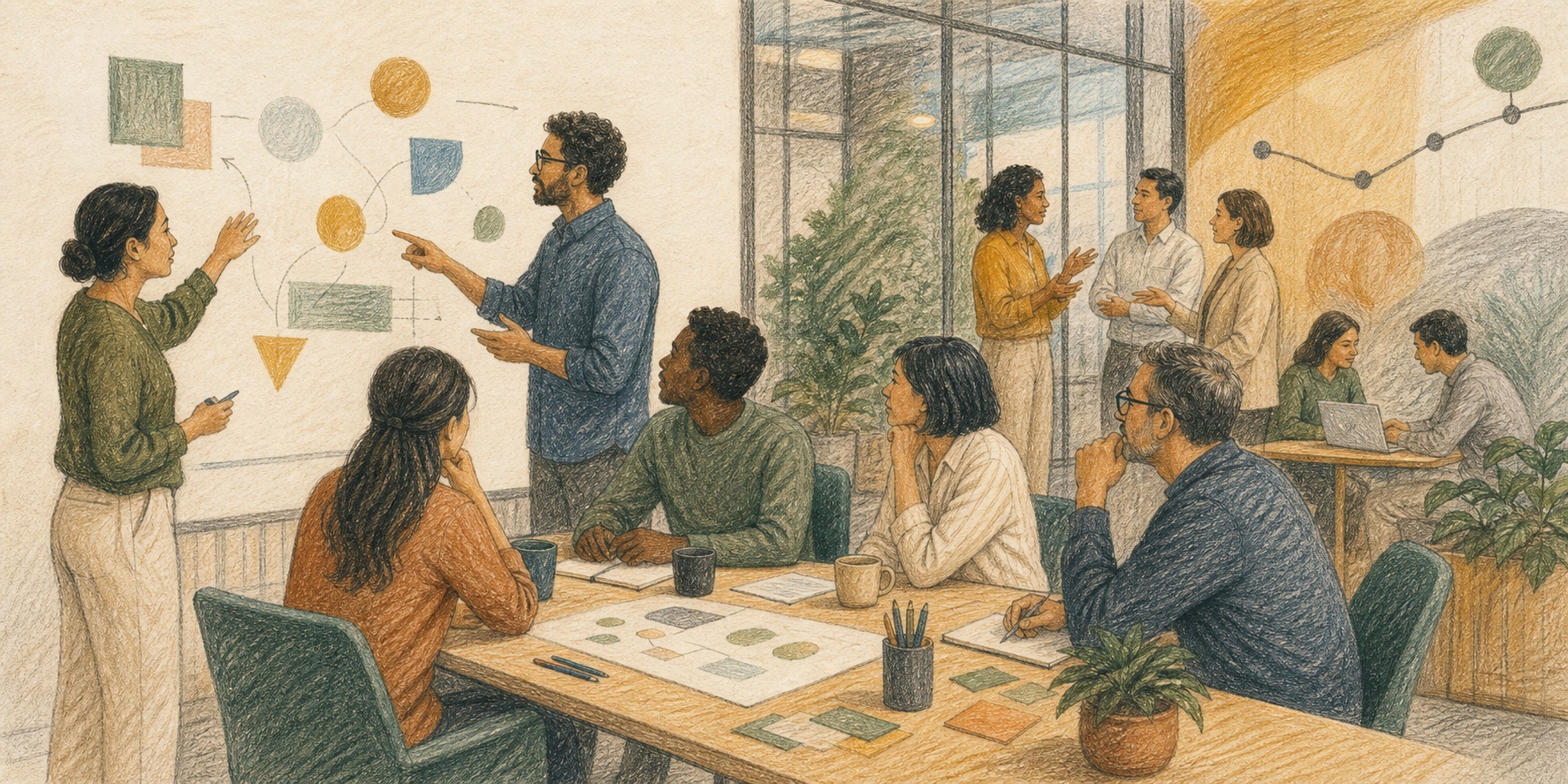
Pencil color story artwork of a workplace team building trust and communication under pressure

In workplaces, the work is useful when teams need clearer human functioning under real pressure: trust, ownership, manager transition, alignment, and conflict repair.

Read more

In workplace settings, CoreXformer becomes useful when a team is not only looking for engagement but for clearer human functioning under real pressure. That can mean new teams, first-time managers, cross-functional friction, low trust, or change fatigue.

The corporate program line is designed for HR, L&D, team leaders, and managers who want development that feels practical, experiential, and behaviorally honest rather than overly abstract.

This makes the work relevant for trust-building, conversations at work, ownership, manager transition, cross-functional alignment, and conflict repair.

06 / Government

Supporting public teams that need cohesion, accountability, supervision, and coordination inside systems

Pencil color story artwork of public-service teams coordinating with seriousness and human awareness

Public-service spaces need grounded language for cohesion, follow-through, supervision, coordination, leadership, and execution without losing institutional seriousness.

Read more

Government and public-service spaces carry a different tone from private workplaces. The need is often for stronger team cohesion, more reliable follow-through, healthier supervisory transition, and better coordination across units or departments.

CoreXformer’s government line uses grounded, people-aware language rather than defaulting to corporate vocabulary. That makes the work more relevant for officers, supervisors, departments, and implementation teams.

It is especially useful when a public team wants to develop the human side of service, leadership, and execution without losing the seriousness of institutional responsibility.

07 / Communities

Supporting collectives that need participation, dialogue, trust repair, and stronger local ownership

Pencil color story artwork of a community circle building participation, dialogue, and local ownership

Community spaces often need deeper participation before structure can work: dialogue across difference, trust repair, shared ownership, and local leadership with care.

Read more

Community spaces often need help before structure alone can work. A group may need stronger participation, healthier dialogue across difference, more shared ownership, or better ways of staying together when fatigue or mistrust starts shaping the collective.

This makes the work relevant for volunteer groups, resident groups, neighborhood initiatives, youth collectives, and other local spaces where people need to move together more consciously.

The community line is most useful when a collective wants not only activity, but deeper participation, relational clarity, and local leadership that can hold people with greater care.

Explore more about Who It Is For

04 / How It Works

A session moves like a living arc: welcome, action, pause, reflection.

People arrive, engage, feel what appears, pause, make meaning, and leave with insight they can apply elsewhere.

01 / Beginning The Session

Warm welcome, lightness, and a non-judgmental entry

Pencil color story artwork of a facilitator warmly welcoming participants into a safe learning circle

The session begins by helping people arrive as human beings first. A warm welcome, shared names, lightness, and safety shape everything that follows.

Read more

A CoreXformer session begins with a warm human welcome. People are received with simple greetings, light humor, and an energy that helps them feel at ease in the moment, whether it is a morning, afternoon, or evening session. This opening is important because it gently shifts participants out of their usual mental rush and into a more present and connected space.

After that, participants begin by introducing themselves and sharing names. This may seem simple, but it helps the group start seeing one another as people rather than roles, titles, or positions. It marks the beginning of entering the space together.

From there, the session begins to establish a non-judgmental environment. The intention is to create a space where participants feel they can show up as they are, without fear of being quickly evaluated or dismissed. In spirit, this space is like sunlight: just as the rays of the sun fall upon the earth without judgment, the session invites presence without immediate labeling. People are welcomed into the process with openness, not pressure.

This beginning matters because the quality of the space shapes the quality of everything that follows. If people feel safe enough to arrive honestly, they are much more able to participate, reflect, and learn meaningfully.

02 / Entering The Activity

Clarity, co-creation, and willingness to participate

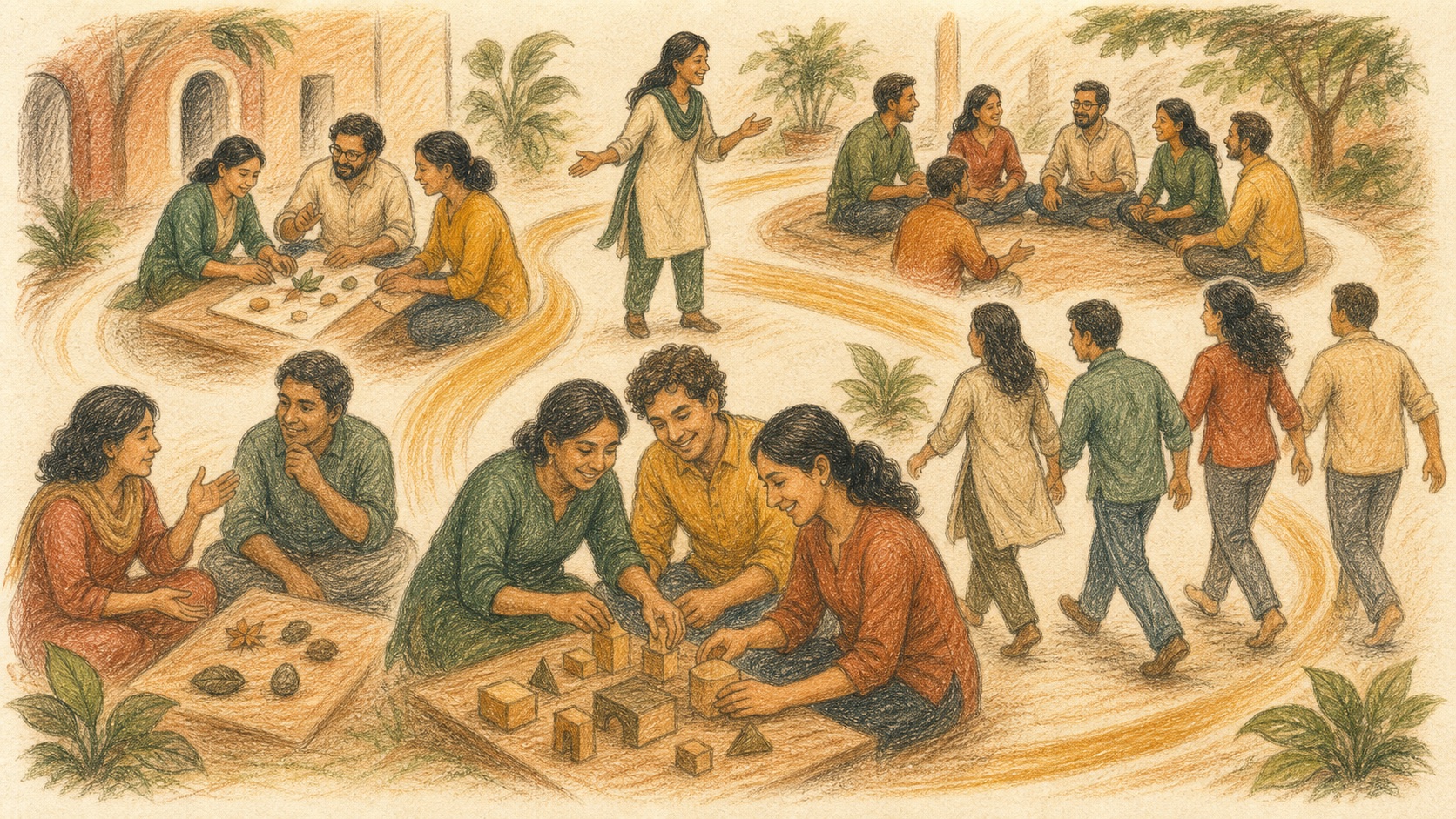
Pencil color story artwork of participants co-creating the activity flow around simple shared materials

Participants are invited into the activity with clarity and ownership. The experience starts feeling co-created, not imposed, so people become active contributors.

Read more

After the welcome, participants are gradually invited into the activity space by being introduced to the structure of the game or exercise. At this stage, the aim is not only to explain rules, but to help people enter the experience with clarity and willingness. A few simple guidelines are shared so that the group understands the task, the flow, and the shared objective.

At the same time, participants are also given room to contribute their own ideas about how the activity can become more fun, more engaging, or more alive. This helps create a sense of ownership from the very beginning. Instead of the experience feeling imposed from outside, it begins to feel co-created by the group.

This transition is important because it turns participants from passive listeners into active contributors. The activity space starts opening not only through instruction, but through participation, curiosity, and shared involvement.

03 / During The Activity

Body, mind, heart, and group connection all come alive

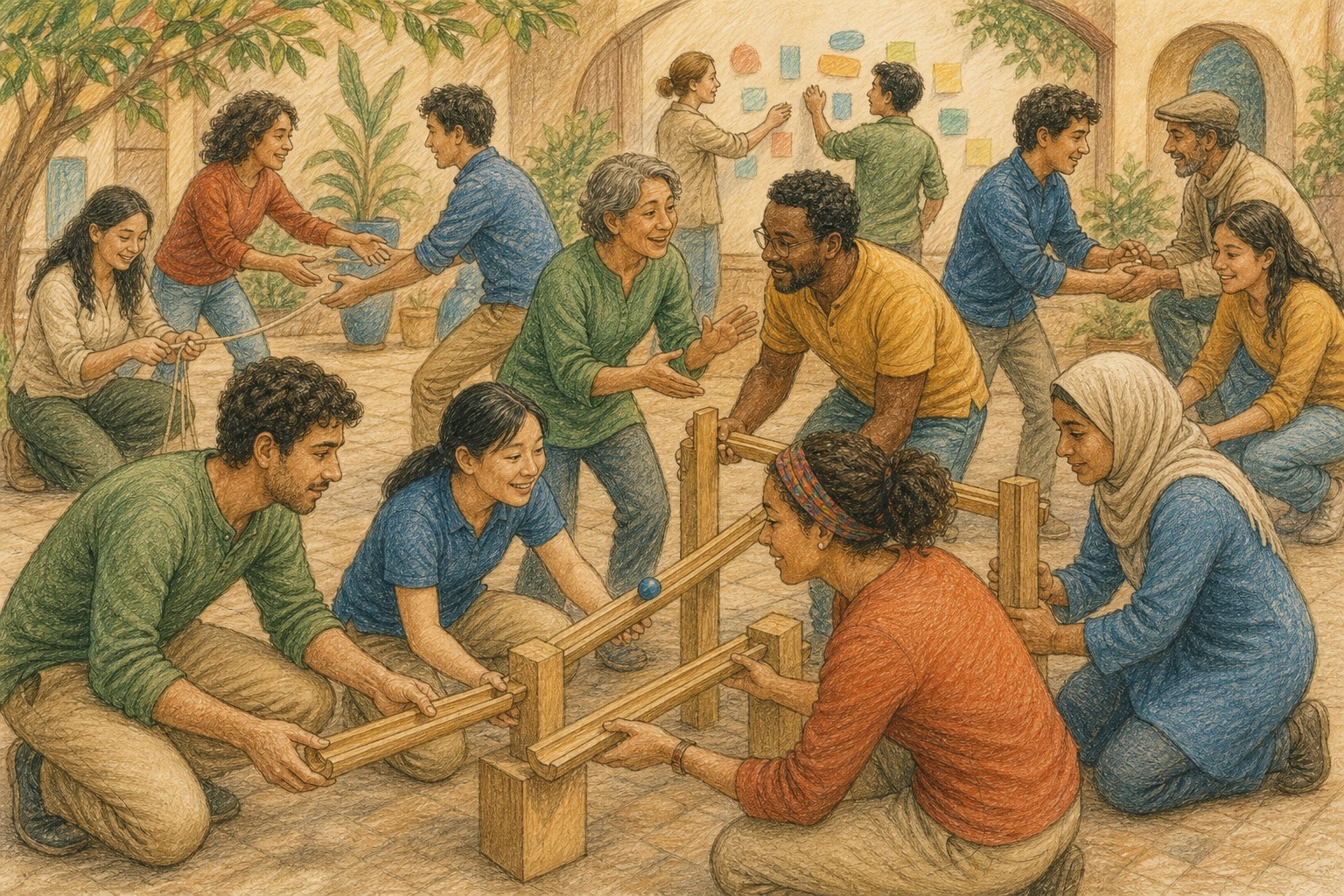
Pencil color story artwork of participants actively cooperating in an experiential learning challenge

The activity engages more than thought. Participants act, react, coordinate, hesitate, support, lead, follow, and adapt in real time.

Read more

During the activity, participants often become deeply engaged because the experience begins to involve not just the mind, but the body and the heart as well. This is one of the reasons experiential learning carries a different quality from passive instruction. People are not only thinking about the situation. They are physically participating in it, emotionally responding to it, and mentally navigating it in real time.

As the activity unfolds, learning happens through engagement itself. Attention becomes sharper, emotions become more alive, and responses become more natural. Participants begin to act, react, coordinate, hesitate, support, lead, follow, and adapt without needing to think about these processes in an abstract way. They are living them directly.

At the same time, participants also enjoy the activity with their partners and with the larger group. This shared enjoyment matters. It creates energy, connection, and openness, which helps people participate more fully and relate more naturally with one another.

This is where the experience becomes powerful. Because the body, mind, heart, and group connection are all involved, the situation becomes more memorable, more honest, and more revealing. What emerges in the activity is not only performance, but a deeper picture of how people show up in shared situations.

04 / What Surfaces

Emotions, habits, patterns, and team behaviors become visible

Pencil color story artwork of participants noticing different emotions and patterns during a shared activity

The activity gives hidden patterns a place to appear. Emotions, communication habits, trust, listening, control, support, and adaptability become easier to notice.

Read more

As the activity unfolds, different things begin to surface in different people. A mix of emotions may arise, sometimes excitement, joy, curiosity, urgency, hesitation, frustration, confidence, confusion, fear, or even silence. These responses are natural because each participant is meeting the same situation through their own background, conditioning, and way of perceiving the world.

Along with emotions, different behavioral patterns also begin to appear. Some people naturally step forward into leadership, some stay back and observe, some become highly cooperative, some struggle with pressure, some seek clarity, and some react quickly without realizing it. In group situations, habits around communication, trust, listening, control, support, and adaptability can all become visible.

This is one of the most valuable parts of the process. The activity does not create these patterns from nowhere. It simply gives them a space to come into view. When participants are able to see what arises in them and in others, the experience becomes a doorway into awareness rather than just an event to complete.

05 / Pause After Action

A short break helps the experience settle

Pencil color story artwork of participants taking a quiet break after an experiential activity

The break is not separate from learning. It gives the mind and body enough space to settle before deeper reflection begins.

Read more

Right after the activity, a short break is given. This break may appear small, but it plays an important role in the learning process. Participants are often still carrying many emotions, sensations, and impressions from what just happened, and the mind needs a little space to settle before deeper reflection can begin.

This pause allows the immediate intensity of the experience to come down gently. It gives people a moment to recover from the activity, to breathe, and to let what happened begin to register internally. Sometimes the most meaningful reflections do not appear in the middle of action, but in the first quiet moments after it.

In this way, the break is not separate from the process. It is part of the process. It helps participants move from active engagement into awareness, making the transition into reflection more grounded and genuine.

06 / Beginning Reflection

Safety first, then emotional recognition

Pencil color story artwork of participants beginning a safe reflection circle after an activity

Reflection begins by making expression safe. Participants are invited to name what they experienced so emotion can turn into awareness.

Read more

After the short break, the first step is to re-establish a safe space where participants feel comfortable expressing what they experienced, both positive and negative. This matters because reflection can only deepen when people feel they will be heard without judgment and without pressure to say the “right” thing.

The opening of reflection is therefore not rushed. Participants are first invited to settle into the space again and sense what they are carrying from the activity. From there, the process begins by asking about the situations they moved through and the emotions that arose within them during those moments.

This helps people do something very important: identify their emotions rather than remain unconsciously driven by them. As participants begin to name what they felt, whether excitement, fear, frustration, joy, confusion, pressure, or calmness, the experience starts becoming clearer in the mind. What was only lived in the moment now begins to turn into awareness.

In this way, reflection begins not with analysis alone, but with emotional recognition. That is what helps the learning become honest, human, and personally meaningful.

07 / Connecting The Dots

From emotion to behavior to impact

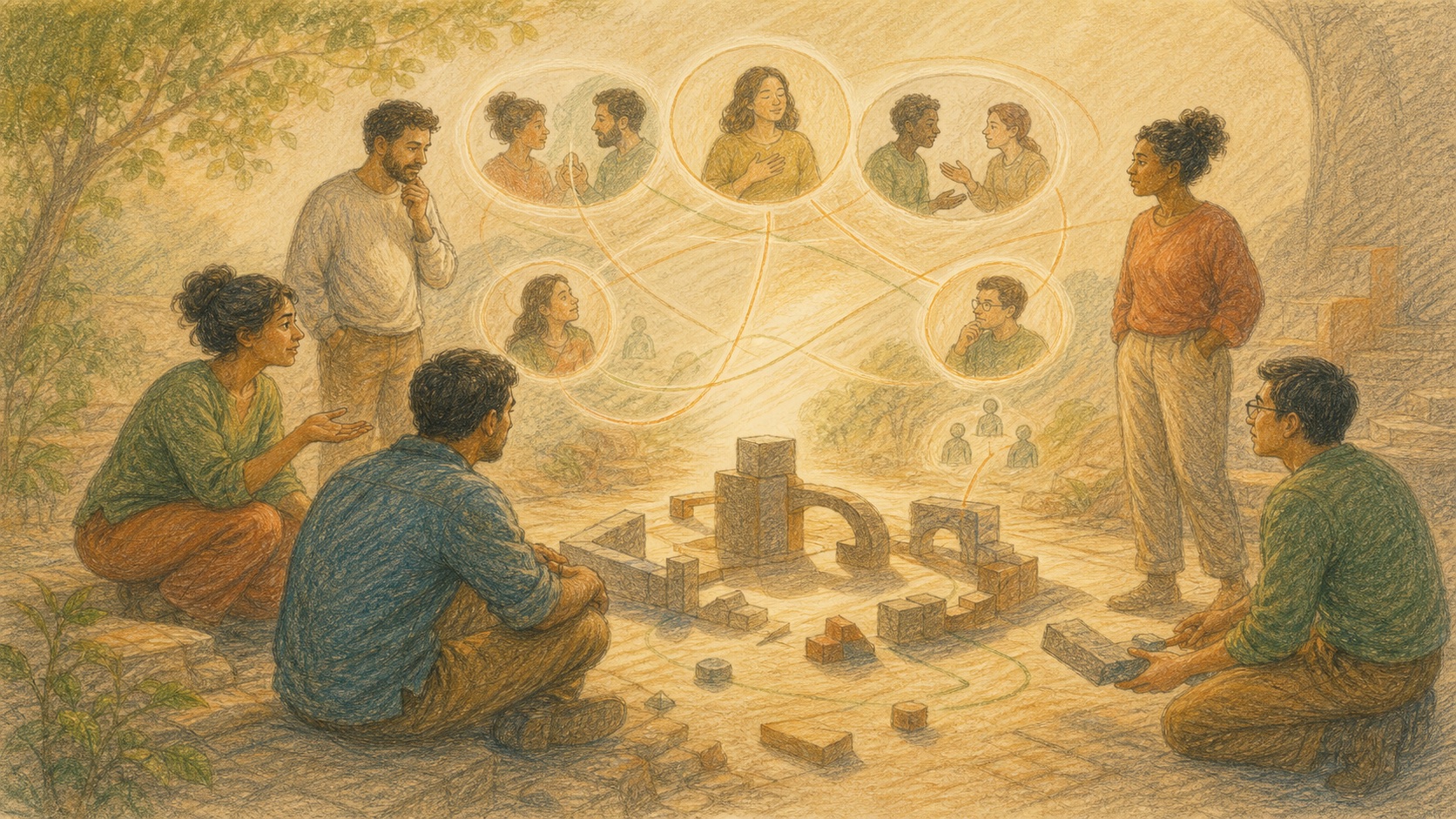
Pencil color story artwork of a group connecting emotional experience to behavior and impact

The reflection connects situation, emotion, behavior, and impact. Once behavior becomes visible, the possibility of change also becomes visible.

Read more

Once participants begin identifying the emotions they experienced, the reflection moves one step deeper. They are invited to look at how those emotions influenced their behavior in the situation. The purpose is to help people see that emotions do not remain separate inside us. They shape how we speak, respond, lead, withdraw, support, hesitate, rush, or relate to others.

At this stage, the reflection begins to connect three things together: the situation, the emotion, and the behavior. Participants are invited to ask questions such as: What exactly was happening in that moment? What was I feeling? How did that feeling influence the way I acted? Did my behavior help the group move forward, or did it create difficulty? What impact did it have on the shared objective and on the people around me?

This helps participants move beyond simply saying “I felt something” toward understanding how that feeling became action. In many cases, they begin to notice patterns they were not fully aware of before. They may discover that pressure makes them rush, uncertainty makes them withdraw, frustration makes them controlling, or fear makes them silent. At the same time, they may also discover positive patterns such as calm leadership, empathy, support, flexibility, or courage.

This part of the reflection is valuable because it turns emotional experience into behavioral insight. And once behavior becomes visible, the possibility of change also becomes visible. Participants can begin to ask whether a different response may serve them, the team, or the situation better in the future.

08 / Closing With Takeaways

Learning is gathered, not imposed

Pencil color story artwork of participants carrying quiet personal takeaways after a reflective session

The session closes by helping each person gather what feels true and useful. The takeaway may be subtle, but it can continue long after the activity ends.

Read more

As the reflection deepens, participants are gently invited to gather what the experience has shown them. At this stage, the goal is not to force a lesson from the activity, but to help each person notice what feels true, relevant, and alive for them. The learning becomes meaningful when it is discovered rather than imposed.

Participants are encouraged to look back at the full arc of the experience: the objective, the emotions, the behavior, the team dynamic, and the outcome. From there, they begin to ask themselves simple but important questions: What did I notice about myself? What did I understand about others? What helped the group move forward? What created difficulty? If I meet a similar situation again, what may I want to carry differently?

This is where personal insight starts becoming a takeaway. Sometimes the takeaway is about leadership. Sometimes it is about patience, communication, trust, emotional awareness, or the need to listen more deeply. Sometimes it is about recognizing a behavior that blocks progress. Sometimes it is about realizing a strength that had not been fully seen before.

The closing learning is not always dramatic. Often, it is subtle but powerful. A participant may leave with one honest awareness, one clearer understanding, or one small internal shift. That is enough, because such learning can continue to unfold long after the session ends.

In this way, the session closes not only with memory of the activity, but with a living takeaway that participants can carry into future situations, relationships, and shared objectives.

Explore more about How It Works

05 / Why It Matters

The activity ends, but awareness can continue travelling.

CoreXformer matters because it does not stop at engagement. It helps people become more aware, more understanding, and more capable in the shared spaces that shape life and work.

01 / Beyond Conventional Training

Why this is not just another session

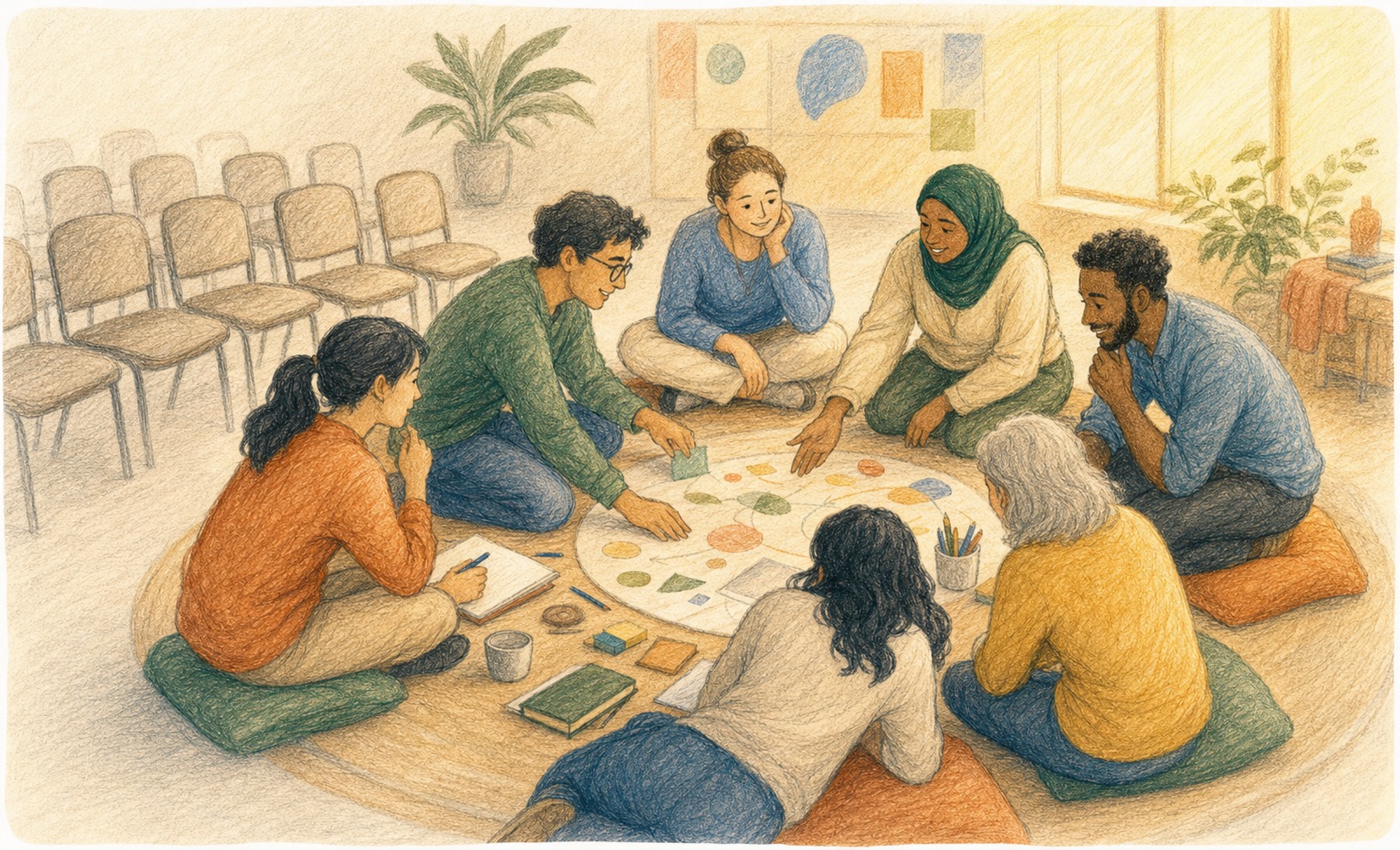
Pencil colour story artwork of participants moving from passive chairs into a shared activity circle

CoreXformer matters because people are not asked only to receive information. They participate, notice, reflect, and make meaning for themselves.

Read more

CoreXformer is not built around lectures, note-taking for the sake of formality, or the repetition of fixed theories. It matters because it creates a different kind of learning environment, one where people are not asked only to receive information, but to participate, notice, reflect, and make meaning for themselves.

In many settings, learning becomes passive. People are told what to think, what to remember, or how they should behave. But human change rarely happens only because something was explained clearly. It often happens when a person lives through a situation, feels something real, sees their own pattern within it, and then arrives at insight from the inside.

That is why this work matters. It is not training by instruction alone. It is learning by experience, reflection, and self-discovery.

02 / Why Experience Matters

People remember what they live more deeply than what they only hear

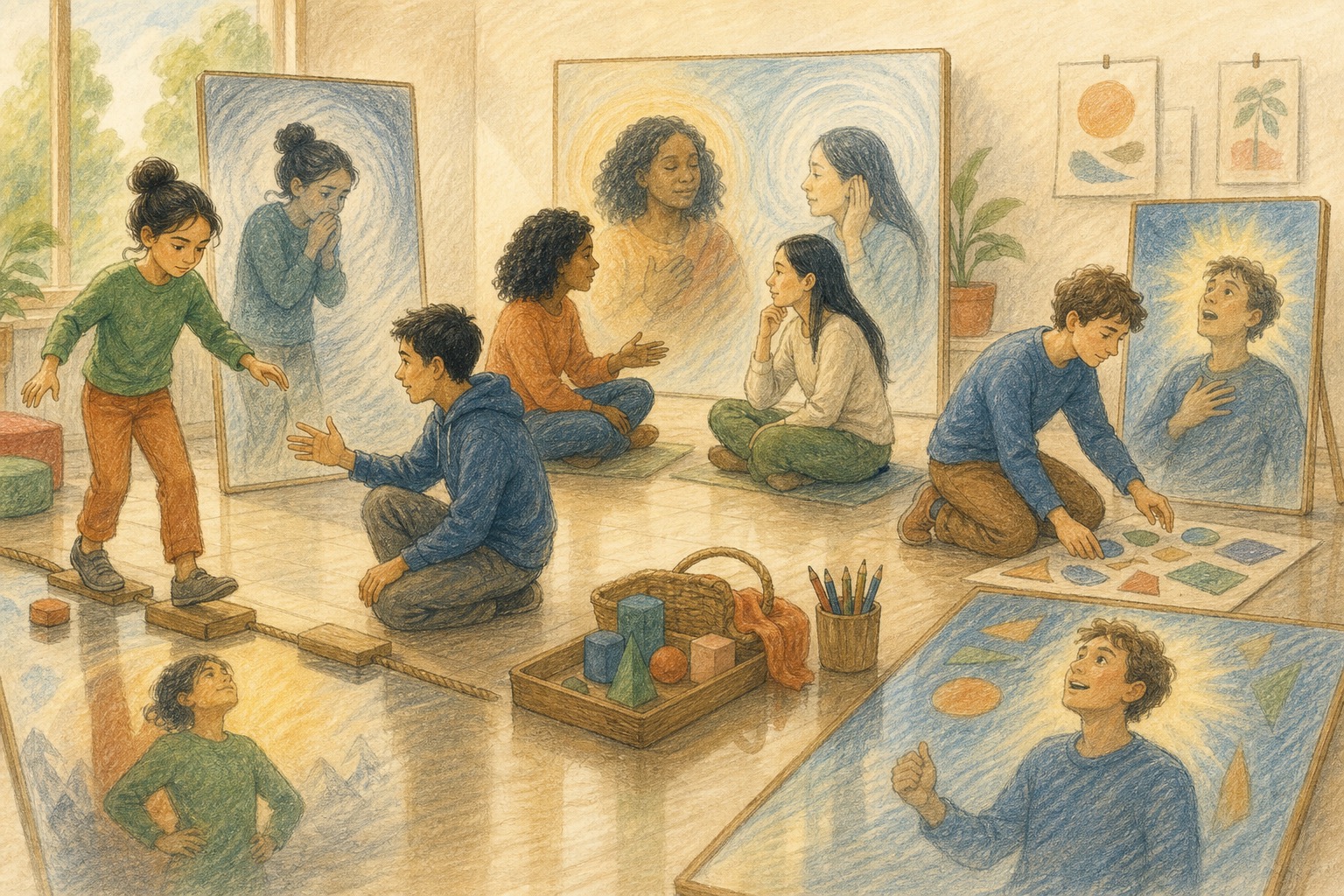
Pencil colour story artwork of participants seeing inner responses through experiential reflection

Experience reveals truths that explanation alone may not reach. It helps bridge the gap between knowing something and seeing it inside one's own behavior.

Read more

Some of the deepest learning happens through lived experience. When body, mind, emotion, and relationship are all involved, the learning is no longer abstract. It becomes personal. People begin to remember not only what happened, but how they felt, how they responded, and what became visible to them in the process.

This matters because experience has a way of revealing truths that explanation alone cannot reach. A person may understand an idea intellectually for years, yet still not see how it lives inside their own behavior until they meet it in a real or simulated situation.

CoreXformer matters because it helps bridge that gap between knowing and seeing, between hearing and realizing, between concept and lived awareness.

03 / Why Reflection Matters

Experience becomes learning when people make meaning from it

Pencil colour story artwork of a reflection circle turning an activity into insight

Reflection creates the missing pause. It helps people recognize emotions, connect them to behavior, understand impact, and choose what to carry differently.

Read more

An activity by itself can remain only an event. Reflection is what turns the event into insight. It helps participants pause, look back, and understand what was happening inside them and around them while they were in action.

This matters because human beings often move quickly from one situation to the next without stopping long enough to understand their own responses. Reflection creates that missing pause. It gives people a chance to recognize emotions, connect them to behavior, understand their impact, and decide what they may want to carry differently into future situations.

Without reflection, experience can fade. With reflection, experience can become wisdom.

04 / Why Human Understanding Matters Today

Modern life often rewards individual success more than collective understanding

Pencil colour story artwork of classrooms, families, teams, and communities connected by empathy

Real life does not unfold in isolation. Stronger ecosystems need awareness, empathy, adaptability, and a more conscious way of being together.

Read more

In today's world, people are often encouraged to become highly individual in orientation. Achievement, speed, output, comparison, and personal success are given strong importance, while the deeper understanding of human behavior, relationship, and shared growth is often neglected.

Yet real life does not unfold in isolation. People move through families, classrooms, teams, offices, communities, departments, and public systems. In each of these spaces, the ability to understand self, understand others, and respond consciously makes a profound difference.

CoreXformer matters because it brings attention back to this human layer. It reminds people that stronger ecosystems are not built only through skill and efficiency, but through awareness, empathy, adaptability, and a more conscious way of being together.

05 / Why Teams Need This Work

Shared objectives reveal more than competence alone

Pencil colour story artwork of a team working on a shared objective while hidden patterns become visible

Teams do not function through technical ability alone. Pressure, difference, uncertainty, patience, confidence, ego, and perspective all begin to matter.

Read more

Whenever people come together around a common objective, differences in perception, communication, confidence, fear, ego, patience, and adaptability begin to matter. A team does not function only through technical ability. It also functions through how people respond to pressure, difference, uncertainty, and one another.

This matters because many team difficulties do not come from lack of intelligence. They come from unseen patterns: misinterpretation, emotional reactivity, silence, defensiveness, impatience, control, or the inability to understand another person's perspective. When these remain hidden, they quietly shape the whole team.

CoreXformer matters because it helps bring those hidden layers into view. Once a team can see itself more clearly, it has a better chance of growing into something more resilient, bonded, and effective.

06 / Why Mistakes Matter

Growth becomes possible when failure is not treated as final

Pencil colour story artwork of participants turning fallen blocks into a ladder of growth

A mistake can become a ladder for growth when it is reflected on honestly. The work creates a safer way to meet error, incompletion, and difficulty.

Read more

A great deal of learning is lost when people are too afraid to make mistakes. In many spaces, people hide uncertainty, avoid vulnerability, and protect themselves from appearing wrong. But when this happens, the opportunity for real growth becomes smaller.

CoreXformer matters because it creates a safer way of meeting error, incompletion, and emotional difficulty. Participants are not invited to celebrate failure for its own sake, but to look at it without shame and to understand what it reveals. A mistake can become a ladder for growth when it is reflected on honestly.

This matters deeply because people often change not when they are praised for being perfect, but when they are able to face what happened, understand it, and adapt from it.

07 / Why Awareness Matters More Than Winning

The real value is what continues after the session ends

Pencil colour story artwork of awareness travelling from a session into classrooms, meetings, and life

Awareness travels. It can return later in classrooms, meetings, relationships, conflicts, transitions, and moments of choice.

Read more

Winning an activity can be satisfying, but it is not the deepest outcome of this work. A task may be completed in the moment, yet its value can remain shallow if people do not understand what the journey revealed about themselves, others, and the situation.

Awareness matters more because it travels. It influences how a person leads, listens, responds under pressure, handles difference, and works toward future objectives. The insight gathered in one reflective session can return later in classrooms, meetings, relationships, conflicts, transitions, and moments of choice.

This is why CoreXformer matters. It is not only about what happened in the activity. It is about what becomes possible in life after the activity.

Explore more about Why It Matters